DueStamp blog
Invoicing guides for freelancers and small businesses
Plain-English answers to the questions that come up when you bill clients: what to put on an invoice, how to chase politely, how to handle deposits and how to bill abroad.
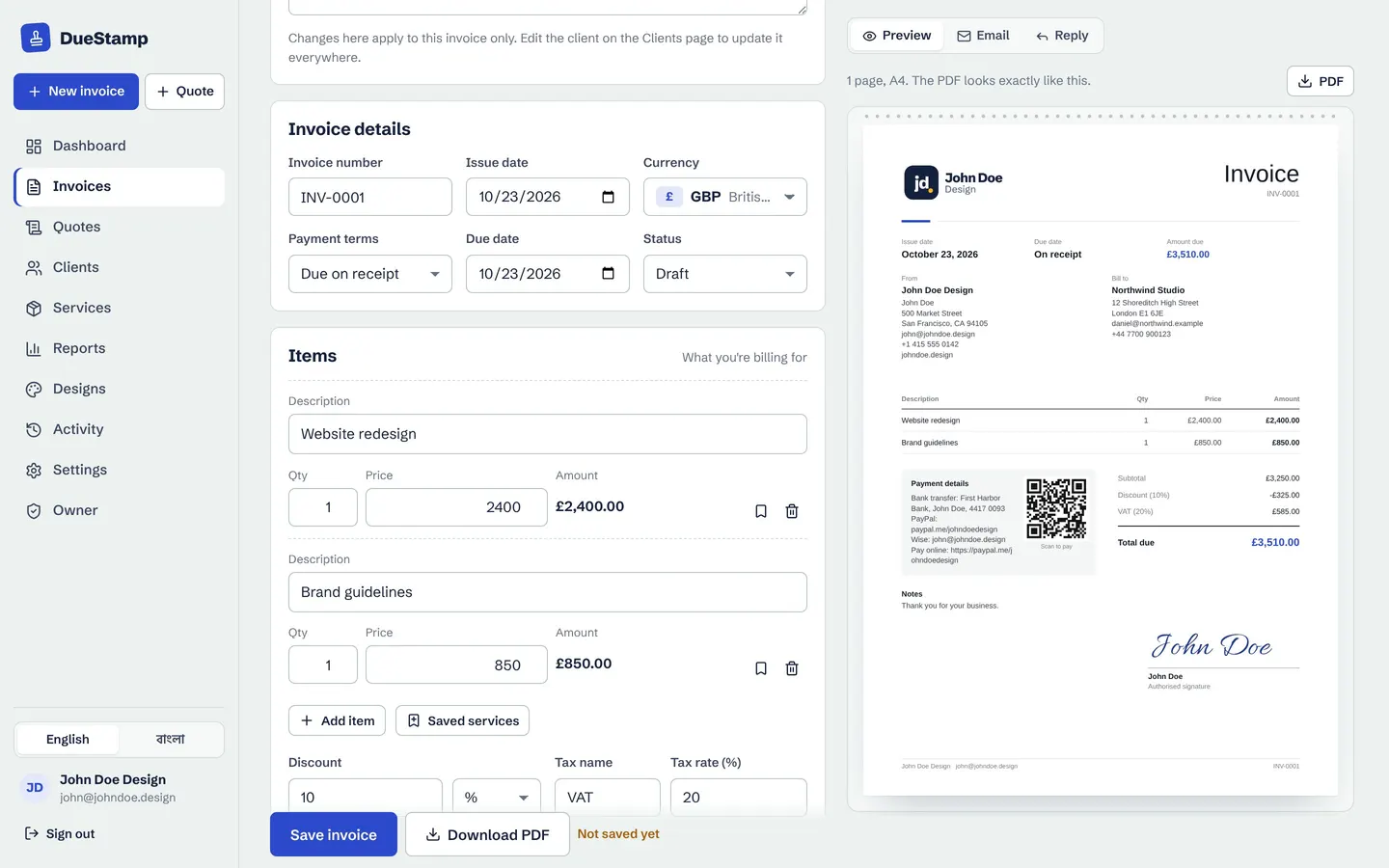
How to make an invoice, step by step
Your first invoice does not need accounting software or a long hunt for a template. Here is exactly what to put on it, in what order, and how to send it so the money arrives on time.
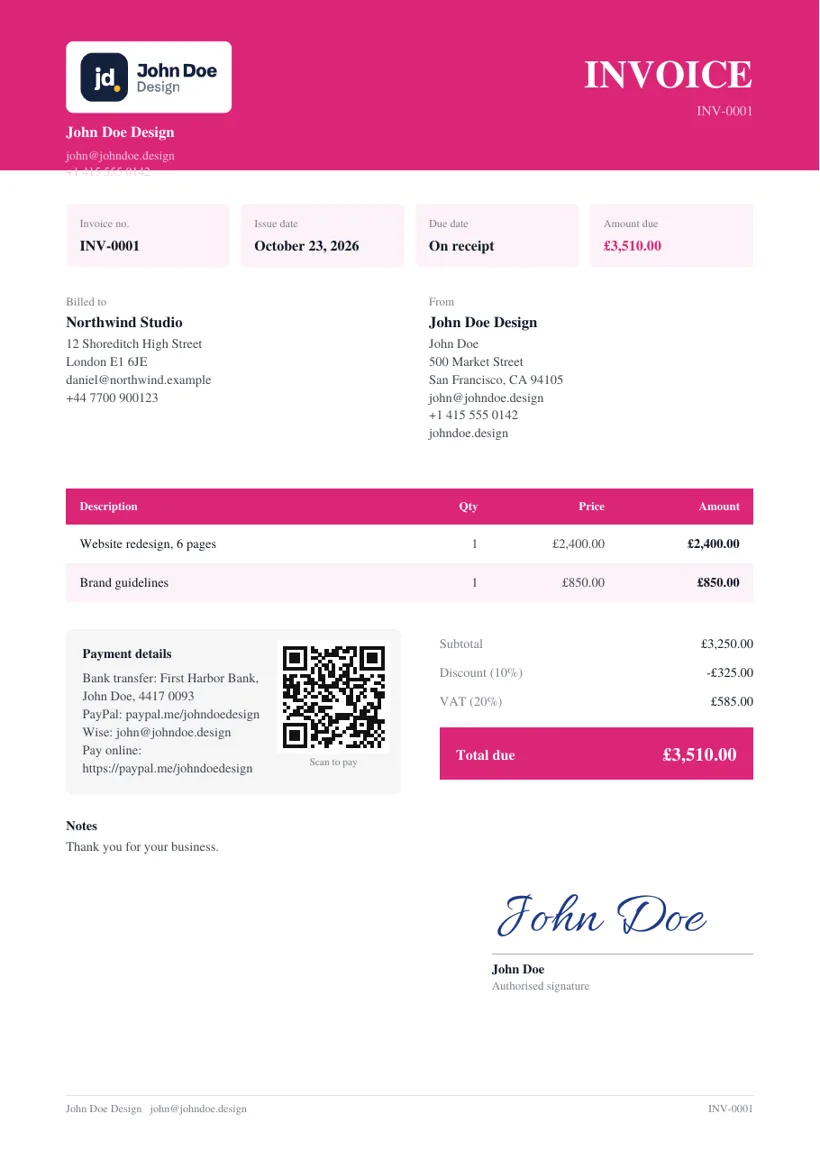
What to include on an invoice: a simple checklist
Most late payments start with a missing detail: no due date, a vague line item, an incomplete bank code. Use this checklist and your invoice will answer every question before the client has to ask.
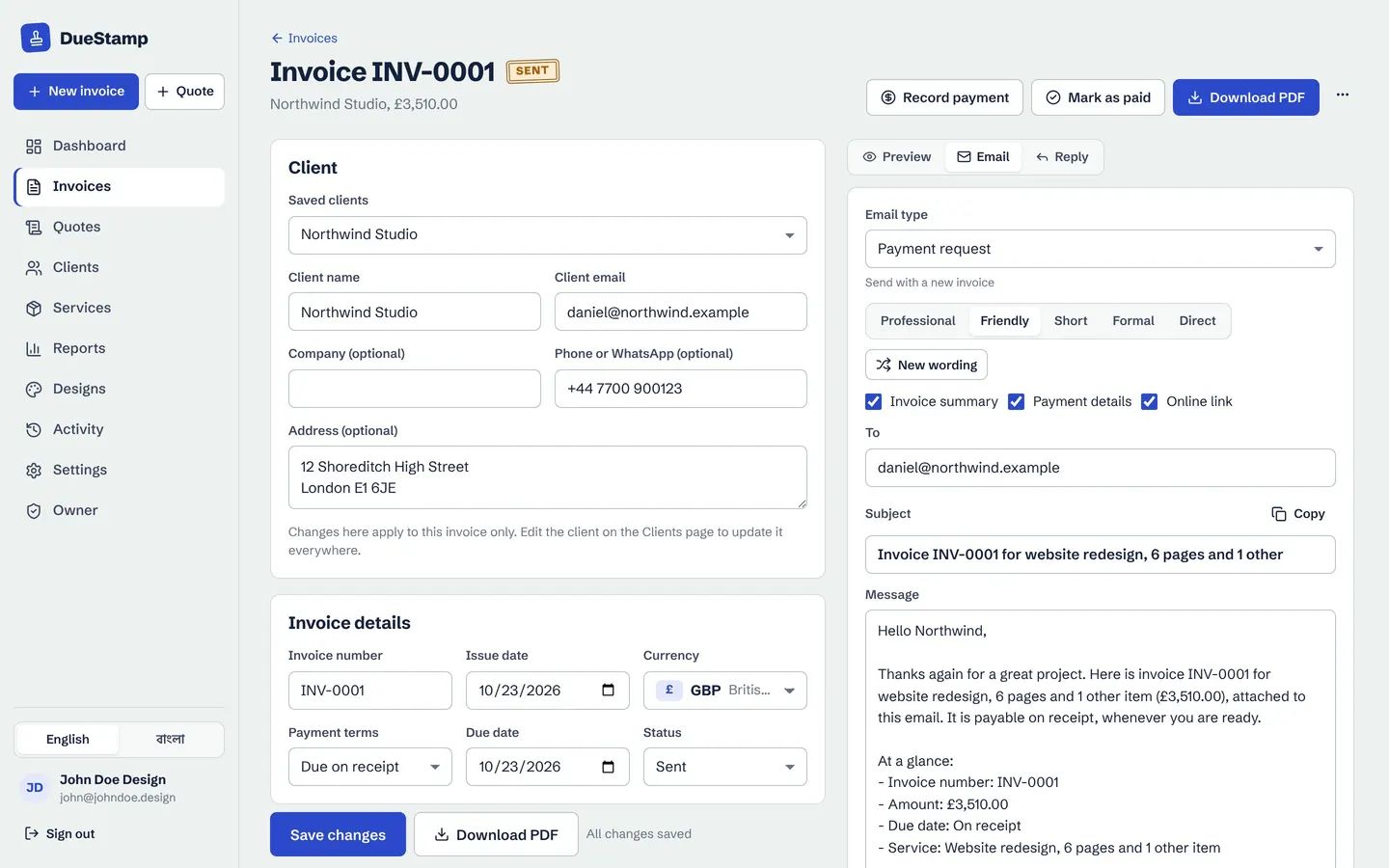
Payment reminder email templates that stay polite and get paid
Six ready-to-copy reminder emails, from a friendly heads-up before the due date to a firm final notice, plus a simple schedule for when to send each one.
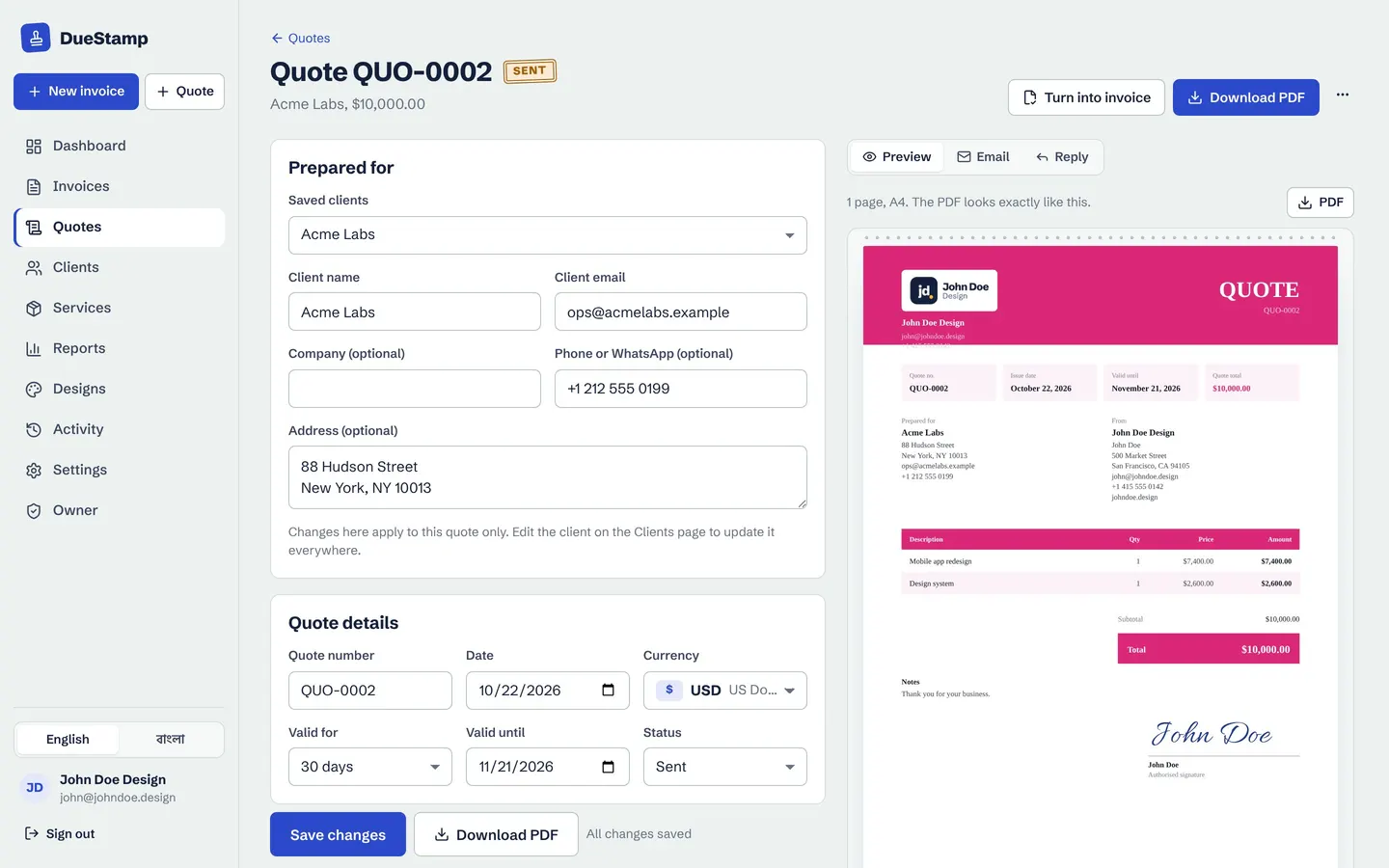
Quote vs invoice: what is the difference and when to send each
A quote wins the work. An invoice gets you paid for it. Here is how the two fit together, where estimates come in, and how to go from a yes to a sent invoice without retyping a thing.
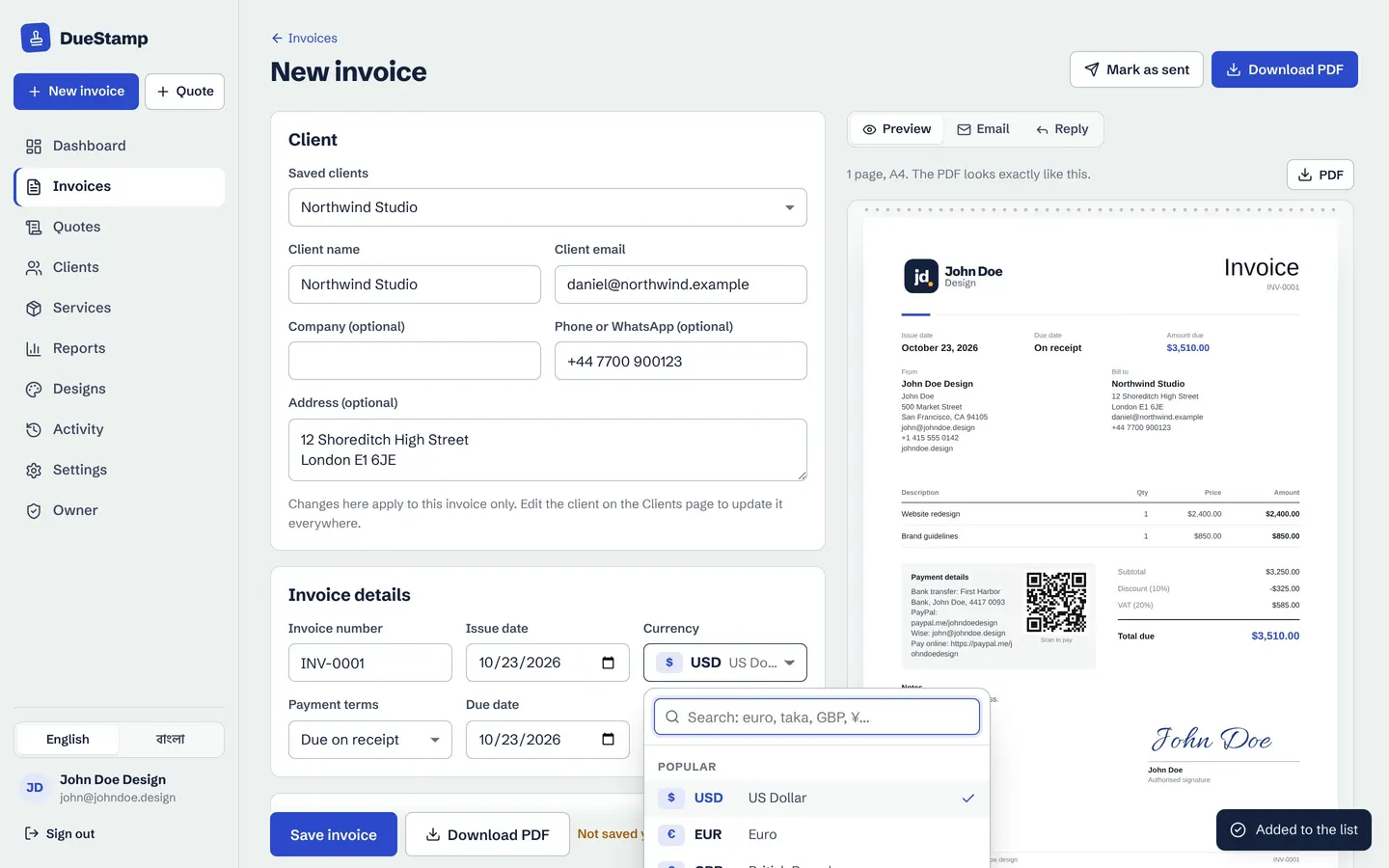
How to invoice international clients in their own currency
Working with clients in other countries is one of the best things about freelancing. Getting paid by them takes a little more care: the right currency, complete payment details, and a clear record of what actually arrives.
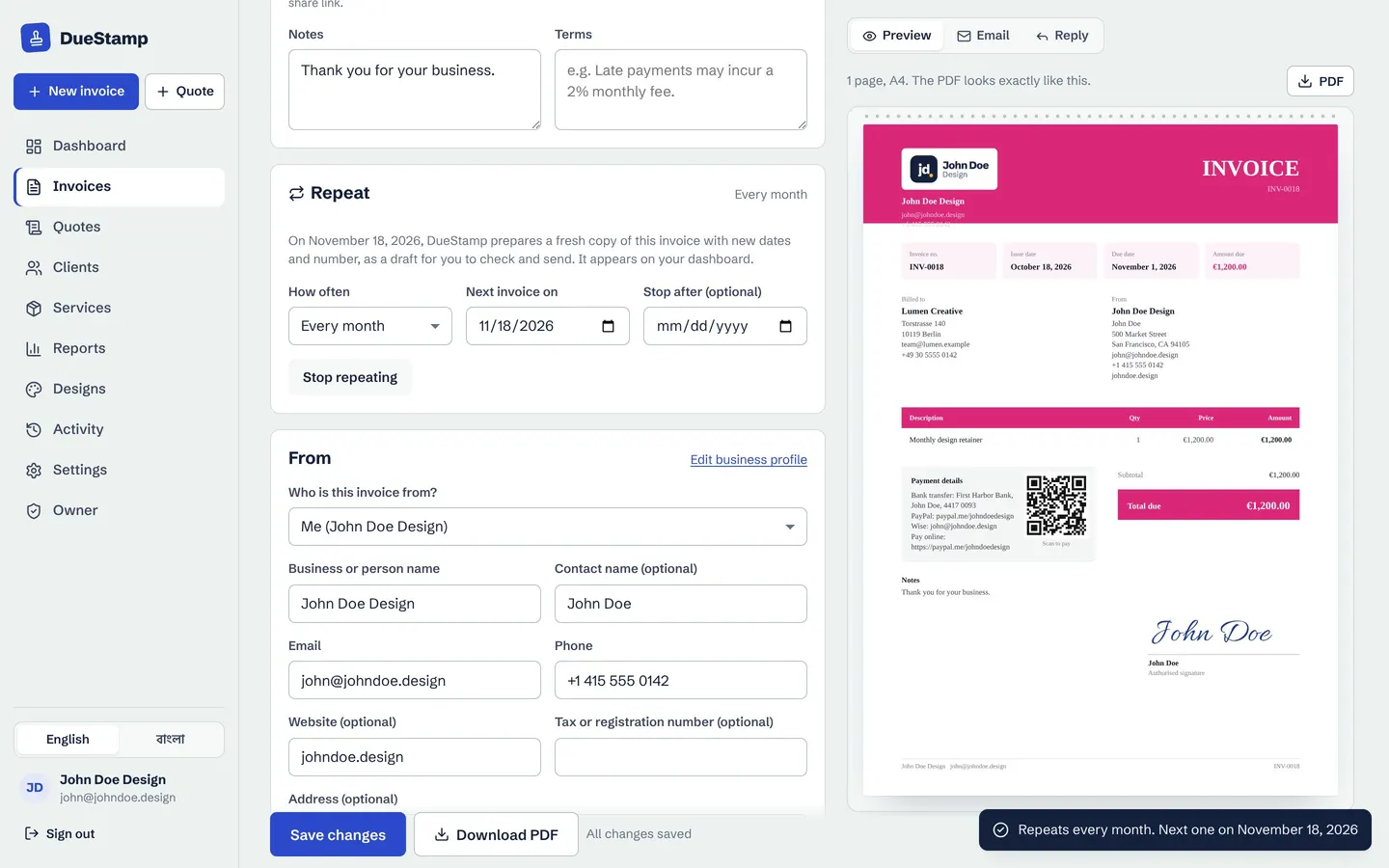
Recurring invoices for retainers and monthly clients
If you bill the same client every month, a recurring invoice saves you from retyping it and, more importantly, from forgetting it. Here is how to set one up properly.
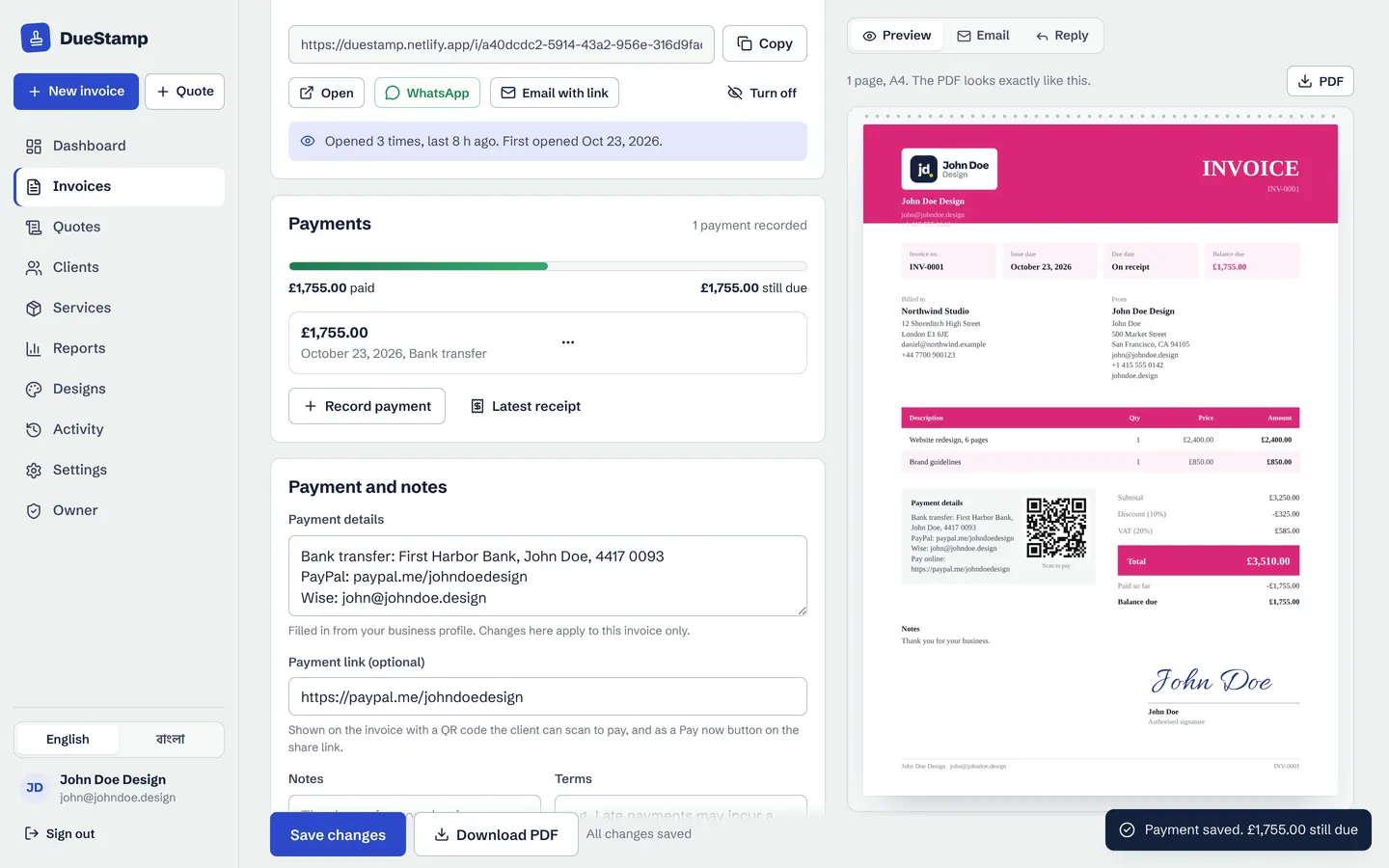
Deposits, part payments and receipts, explained
Clients often pay in pieces: a deposit up front, an installment in the middle, the balance at the end. Here is how to invoice for that cleanly, record each payment and give a proper receipt.
Your next invoice, done in about a minute
Free to use. No credit card. Your invoices stay private to your account.